The Witchcraft of Plant Spirit Work
There is a particular kind of remembering that happens when you step into a hedgerow at dusk.
Not the remembering of facts and dates, nor the tidy kind of history that lives on shelves and in footnotes, but the older remembering, the one that stirs in the blood and wakes in the bones. The kind of memory that belongs to the soil itself.
This is where plant spirit work begins, and this is where European witchcraft has always lived: in the deep green current where the human soul meets the living world and realizes, with a quiet shock, that it is not alone.
Because long before witchcraft became a word of accusation- before it was weaponized by Church and state, before it was dragged into courtrooms and burned into public imagination- it was something simpler and far more dangerous:
It was relationship.
It was the art of knowing the hidden intelligence within the green world, and the willingness to be changed by that knowing.
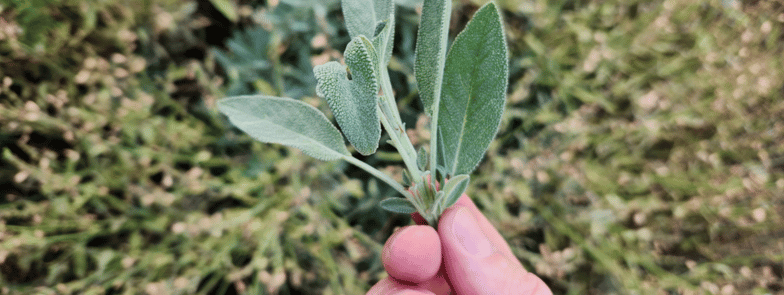
The Green World as the First Temple
In pre-Christian Europe, the land was not scenery. It was not nature as a separate category, distinct from human life. The land was animated, ensouled, inhabited. Every grove was a threshold. Every spring a mouth. Every standing stone a witness.
The people who lived close to the soil did not need to be convinced that spirit existed; they lived inside its constant presence. The trees were elders. The fields were holy. The weather was an expression of will.
And the plants were not inert resources. They were powers.
Even today, if you sit long enough with a plant in silence- if you listen beyond your thoughts, beyond your expectations- you can feel it. A subtle pressure. A signature. A personality. A quiet radiance of presence that doesn’t speak in words but communicates nonetheless.
This is not metaphor… this is the foundation of the old craft.
The earliest European magical practices were not built upon abstract doctrine. They were built upon intimacy with the living land. Knowledge of the plants was not only medicinal, but spiritual. Their virtues were not merely chemical, but energetic, mythic, and ensouled. A plant was understood to have temperament, influence, affinities—ways of acting upon body and fate alike.
In this worldview, healing and sorcery were never truly separate. Both were forms of alignment. Both were methods of persuasion. Both were ways of entering conversation with the unseen forces that move through the world.
To work with plants was to work with spirits… and to work with spirits was to practice witchcraft.
The Witch as the One Who Knows
The historical witch (before the witch hunts and their propaganda) was often a figure on the edge of the village. Not always ostracized, but set apart. A person who carried knowledge that was both necessary and unsettling. A midwife. A healer. A charmer. A whisperer over wounds. A maker of bitter brews and protective bundles.
This knowledge was not typically learned from books.
It was learned by watching the seasons.
By tending the garden.
By observing the animals.
By apprenticing under older hands.
And by paying attention to the strange intelligence that gathers at the edges of the world: in the places where the wild presses close.
It is no accident that the witch is associated with the hedge, the forest, the crossroads. These are not merely physical locations- they are symbolic landscapes of initiation. They are the places where the ordinary world thins and the Otherworld can be felt breathing just behind the veil.
In European folk culture, the hedge was not just a boundary of property. It was a boundary of reality.
To ride the hedge was to move between worlds.
And what grew along the hedge? What thrived at the edges?
Plants with power.
Plants with thorns and poison and medicine in equal measure. Plants that do not belong wholly to the domestic sphere, nor wholly to the deep wild. Plants that live in liminal places, carrying liminal spirits.
Hawthorn. Elder. Mugwort. Yew. Wormwood. Belladonna. Henbane.
The old witches did not choose these plants at random… these plants chose them.
Flying Ointments and the Dreaming Body
Few images have been so sensationalized and so misunderstood as the witch flying through the night sky. Modern culture has turned it into costume and caricature, but the historical root of this myth points to something far stranger and far more profound.
In early modern Europe, there are records scattered, distorted through the lens of persecution of witches using ointments, unguents, and plant-based preparations to enter altered states. These mixtures often included plants now known as tropane-containing nightshades: belladonna, henbane, mandrake, and datura.
Dangerous plants. Spirit-heavy plants.
Plants that blur the boundary between waking and dreaming.
Plants that unmoor the soul from the strict architecture of the rational mind.
These were not party drugs. They were initiatory technologies, and their use was often wrapped in secrecy because the price of misuse was death, madness, or spiritual disintegration.
But when used with skill, reverence, and the guiding presence of the plant spirit itself, these allies opened doors.
They carried the witch into the Otherworld- not as fantasy, but as experience.
The flight described in folklore may have been a spirit-flight: the soul leaving the body in trance, traveling in vision, moving through the hidden pathways of the land and the realms beneath it. The witch, in this sense, becomes a walker between worlds. A negotiator. A messenger. A thief of fire.
And at the center of this is the plant.
The plant is the key.
The plant is the steed.
The plant is the teacher.
This is one of the clearest historical echoes of plant spirit work within European witchcraft: the understanding that plants are not merely substances but gateways—each one a living door with its own guardian intelligence.
The Herbalist as Sorcerer
In the older European worldview, the herbalist was never simply a natural health practitioner. The herbalist was often a cunning person: a worker of charms, a knower of signs, a practitioner of remedies that blurred the line between medicine and magic.
To treat illness was to treat misfortune.
To treat misfortune was to treat spiritual imbalance.
The body was not separate from the soul. The soul was not separate from the land. And the land was not separate from the unseen powers moving through it.
This is why old herbcraft includes prayers, incantations, and ritual gestures. Why certain plants were gathered at certain hours. Why some plants required offerings before harvesting. Why some could not be taken without consequence.
These practices may look quaint to modern eyes, but they are built on an animistic logic: the understanding that a plant is a being, not an object.
To take from a being requires relationship.
And relationship requires etiquette.
This is the beating heart of plant spirit work, and it is also the beating heart of European witchcraft. The witch is not simply someone who uses herbs. The witch is someone who speaks with them, bargains with them, listens to them, and receives instruction through dream and omen.
The witch learns the old language- the language of scent and taste and season. The language of roots.
The Familiar Spirit and the Plant Ally
One of the most misunderstood elements of traditional witchcraft history is the familiar spirit. Popular culture imagines a cat in a witch’s lap, but historically the familiar was something stranger: a spirit-helper, sometimes appearing as an animal, sometimes as a small being, sometimes as a shadow or voice, sometimes as a presence that moved through dreams.
These spirits were said to assist with healing, protection, divination, and sometimes harmful workings. They could be fed, housed, bargained with, and called upon.
If you strip away the fear-mongering of the witch hunt narratives, what remains is an ancient spiritual technology: the cultivation of a relationship with a guiding intelligence that operates between worlds.
And plant spirits often function in exactly this way.
Anyone who has sat in sustained relationship with mugwort, for example, knows that it is not simply a sleep herb. It is a companion of the dreaming road. It teaches through symbol, sensation, and vision. It shifts the atmosphere of the mind. It makes the night more porous.
Anyone who has worked deeply with hawthorn knows that it is not merely a cardiovascular tonic. It is a guardian. A thorned gatekeeper. A spirit of the boundary.
Anyone who has entered into elder’s current knows that elder is not just medicine- it is an ancestral intelligence, a keeper of death and renewal, a grandmother spirit who can bless or curse depending on how she is approached.
These are familiars in green bodies.
They are teachers.
They are allies.
They are dangerous if disrespected.
And they are profoundly transformative if honored.
The Witch’s Garden and the Wild Edge
The witch’s relationship with plants has always lived in a tension between cultivation and wilderness.
There is the garden- the domestic space where medicine grows close to home, where nourishment and remedy are tended with human hands. And there is the wild edge- the place where plants grow with no permission, where they answer only to weather and soil and fate.
Traditional witchcraft lives in both.
The witch learns to grow what can be grown, and to seek what must be found. To tend the gentle allies: calendula, chamomile, rosemary… and to make pilgrimage for the darker ones. To walk out at twilight and find the plant that calls, unbidden, from the roadside ditch.
There is a kind of initiation that happens when you harvest a plant from the wild. When you approach it slowly, when you speak to it, when you feel the moment of hesitation in your hands: May I take you?
And then, if the moment is right, the plant answers.
Not always with words. Sometimes with a sudden gust of wind. Sometimes with the quiet certainty that settles into your chest. Sometimes with a sharp “no” that makes your stomach tighten and your skin prickle.
These are not imaginary experiences.
They are the beginnings of real spirit contact.
And once you have experienced this- once you have felt the living intelligence of a plant respond to your presence something inside you changes permanently.
You can no longer believe the world is dead.
And this is the oldest witchcraft there is.
Witchcraft as the Art of Listening
When we speak of historical European witchcraft, it is tempting to look for a single unified tradition, a neat lineage, a codified system.
But the truth is messier and far more beautiful.
European witchcraft was never one thing. It was a web of localized practices- regional, familial, often secretive, passed through whispered instructions and hard-earned experience. It was shaped by landscape: by the plants that grew there, by the spirits that haunted those hills, by the saints that replaced the gods, by the folk customs that survived in the cracks of empire.
But through all of it, one thread remains unmistakable:
The witch listened.
The witch listened to the land, to the dead, to the unseen, to the plants.
The witch did not merely use herbs. The witch entered into communion with them. The witch understood that the green world is not a pharmacy, but a congregation of being; each one with its own mysteries, its own desires, its own ways of giving and taking.
This is why plant spirit work is not a modern invention, and it is not a trendy spiritual aesthetic.
It is an ancestral current… it is the old way resurfacing.
The Return of the Green Current
In our time, many people feel a hunger they cannot name.
They are surrounded by information, surrounded by technology, surrounded by convenience and yet something in them aches. Something feels starved. Something feels forgotten.
Often what is missing is not belief, but contact.
Direct contact with the living world.
Contact with the spirits that still move through root and leaf.
Contact with the quiet, untamed intelligence that exists beyond human systems.
The old European witch knew this contact intimately. Not as theory, but as lived experience. The witch knew that the plants were not passive. That they could bless, teach, warn, seduce, and transform. That they carried doorways into the unseen.
And the witch knew, above all, that the world is woven together by relationship.
This is the heart of plant spirit work.
It is not about collecting correspondences.
It is not about memorizing folklore.
It is not about adopting a costume of “witchcraft.”
It is about returning to the ancient practice of alliance.
It is about standing before a plant- humbled, quiet, awake… and learning how to listen again.
Because the green world is still speaking.
The old ones have not left.
The hedgerows still shimmer with presence.
The witch’s road is still there, winding through root and thorn, waiting for those who are willing to walk it slowly.
And if you go out at dusk, if you step beyond the noise, beyond the artificial light, beyond the endless human urgency- you may find what witches have always found:
A plant.
A presence.
A door.
And the feeling, unmistakable and electric, that you are being watched with ancient eyes.
Not with malice.
With recognition.
With invitation.
With the quiet promise that if you choose this path… if you choose to enter the old relationship- you will not return unchanged!